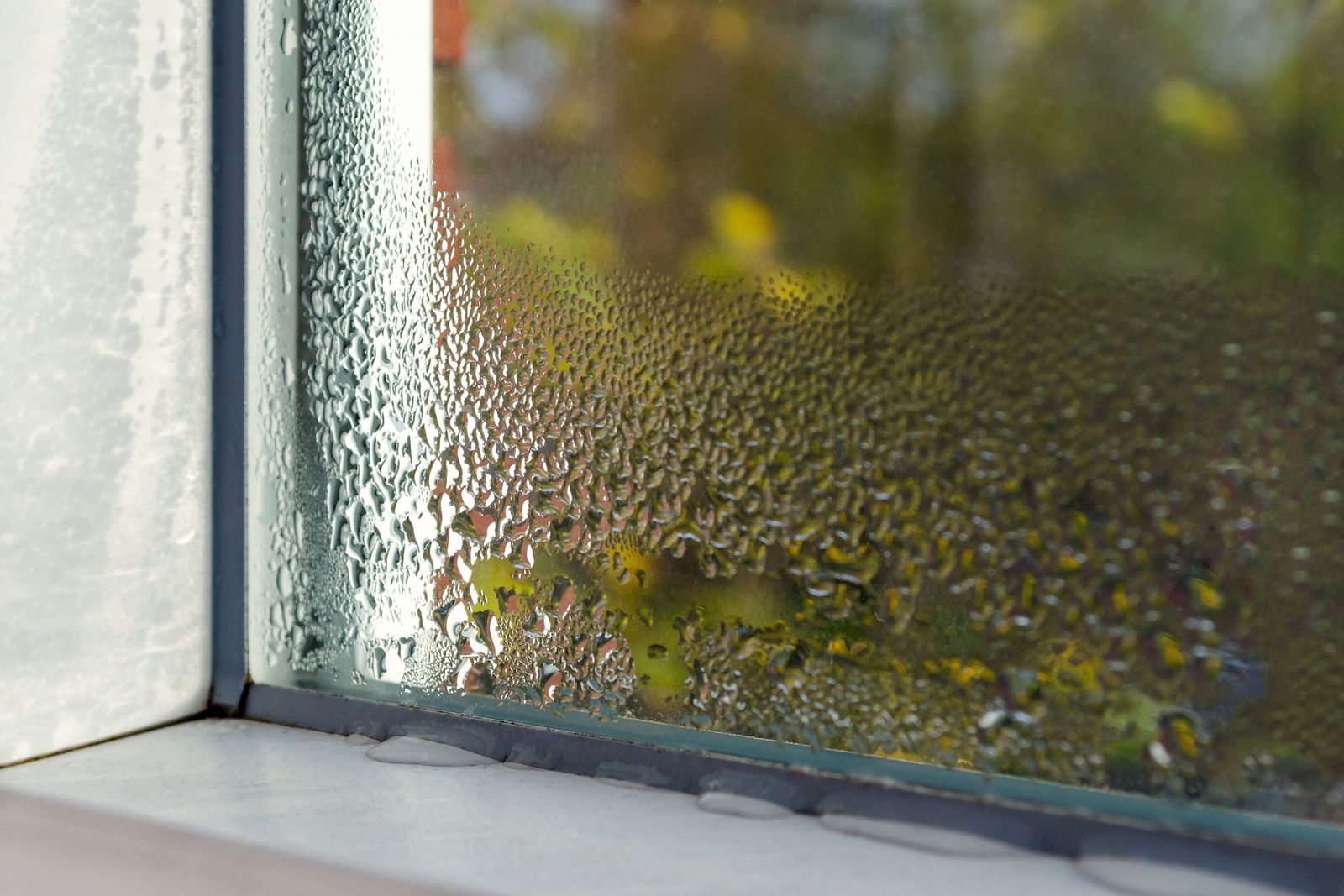
Water running down the inside of a window on a cold morning looks like a window problem. Most of the time it is an air problem. Warm indoor air holds moisture, and when that air touches cold glass it gives the moisture up as droplets, exactly as a cold drink sweats in summer.
A little fog at the bottom of the glass on the coldest mornings is normal. Water that pools on the sill day after day is worth fixing, because it leads to peeling paint, rotting wood and mold.
Related on Amazon: browse humidity monitors and window moisture absorbers. As an Amazon Associate we earn from qualifying purchases.
Where the Water Is Tells You the Cause
| Where you see it | What it means |
|---|---|
| On the room side of the glass | Indoor humidity is too high for how cold the glass is |
| On the outside of the glass, on cool mornings | Harmless. It means the window insulates well |
| Between the panes of a double-pane window | The seal has failed. The unit needs replacing, and no amount of ventilation will clear it |
| Only on one or two windows | A local source of moisture, poor air movement there, or a colder window |
Where the Moisture Comes From
- Showers and baths.
- Cooking, especially boiling with no lid and no exhaust fan.
- Drying laundry indoors.
- A dryer that is not vented outside, or a loose vent hose.
- Breathing. A family adds several quarts of water to the air every day.
- Humidifiers set too high.
- Houseplants and aquariums in numbers.
- A damp basement or crawl space.
- Unvented gas or kerosene heaters, which release water as they burn.
- A new house or recent plastering and painting, which dry out over the first year.
Free Fixes First
- Run the bathroom fan during showers and for twenty minutes after. Keep the door shut so the steam goes out, not into the hall.
- Use the range hood whenever you cook, and put lids on pans. Check that the hood vents outdoors.
- Dry clothes outside or in a vented dryer.
- Open curtains and blinds during the day. Heavy curtains trap cold, still air against the glass.
- Move furniture a few inches away from outside walls and windows.
- Open windows wide for five to ten minutes once or twice a day. A short, sharp airing swaps damp air for dry without cooling the house much.
- Keep interior doors open so air circulates.
- Turn the humidifier down or off.
Measure the Humidity
A hygrometer costs little and tells you whether the fixes are working. The colder it is outside, the lower indoor humidity has to be to keep the glass dry. A level that is fine in mild weather will fog windows in a hard freeze. See winter humidity settings by outdoor temperature.
When to Use a Dehumidifier
If humidity stays high after you have dealt with the sources and the ventilation, a dehumidifier will pull it down. Size it for the space and place it where the moisture is, often the basement or a central hallway. In a cool room, check that the model is rated for low temperatures. See how many dehumidifiers a home needs and how long a dehumidifier should run.
Disposable moisture absorbers on the sill catch drips in a small space such as a closet or a camper. They do not lower the humidity of a room.
Warm the Glass
- Interior window film kits, shrunk tight with a hair dryer, add an insulating layer for one season at low cost.
- Storm windows do the same permanently.
- Weatherstripping stops cold drafts that chill the glass and frame.
- Modern double or triple-pane windows stay much warmer on the inside surface.
- Let heat reach the window. A radiator or vent under a window is there for this reason, so do not cover it.
Mop It Up in the Meantime
Wipe the glass and sill each morning with a cloth or a window vacuum. Standing water is what damages the frame. If black spots have appeared on the frame or the caulk, clean them promptly and keep the area dry.
When to Call Someone
- Fog between the panes: a glazier can replace the sealed unit without replacing the whole window.
- Damp patches on walls or ceilings as well as windows.
- Mold that keeps returning.
- Any fuel-burning appliance that might be venting into the house. This is a safety matter. Have it checked and make sure carbon monoxide alarms are working.
Final Thoughts
Window condensation is the house telling you there is more moisture in the air than the glass can stand. Cut the moisture at the source, air the house briefly each day, and measure. Buy a dehumidifier or new windows only if the simple steps are not enough.
Product links and availability last checked November 2026.